Table of Contents
🛑 Quick Safety Note
Air conditioner placement involves electrical wiring, refrigerant lines, and BC permit requirements. Homeowners can check clearance, shade, and airflow, but only a licensed HVAC professional should relocate or connect equipment. Never attempt regulated work yourself—call a qualified technician for safe, code-compliant installation.
If you’re installing or replacing central air conditioning in Vernon, Coldstream, or Lake Country, the placement of the outdoor unit is crucial. Our Okanagan summers are hot and dry, while our winters bring snow loads. Poor placement can result in higher energy bills, repairs, and even noise complaints. Here’s what BC homeowners should know.
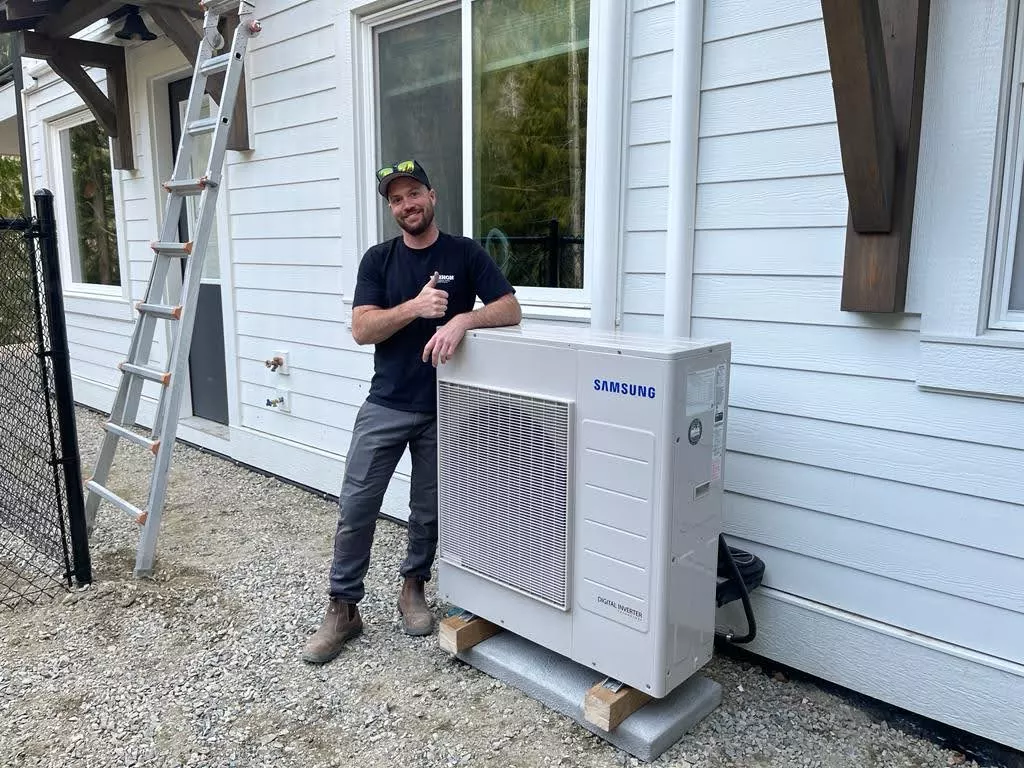
What Is The Best Location For an AC Outdoor Unit in BC?
In British Columbia, outdoor AC units work best on the north or east side of a home with 60 cm (24 in.) of clearance and a raised pad. Proper placement improves efficiency, reduces hydro costs, prevents snow and runoff damage, and avoids unnecessary noise issues.
Signs Your AC Unit Might Be in the Wrong Spot
- Higher than normal hydro bills during summer
- Rooms stay warm even with the AC running
- Loud humming or vibration carrying into the house
- Snow, ice, or debris collecting around the unit
- Neighbours mentioning noise concerns
Why Placement Matters
The outdoor unit needs clear airflow, moderate sun exposure, and protection from snow. In the North Okanagan, we see common issues when a condenser is:
- Installed on the south wall with full afternoon sun
- Placed too close to a fence, deck, or shrubs
- Exposed to roof runoff or drifting snow
- Positioned near bedrooms or living spaces where noise is disruptive
- Set on old pads that are uneven or sinking
These factors strain the system, shorten its lifespan, and increase cooling costs.
What Homeowners Can Do
- Check airflow: You should have at least 60 cm (24 in.) of clear space around the coil.
- Look for shade: A shaded north or east wall is ideal in Vernon’s climate.
- Mind snow and rain: Units should be raised on a level pad to stay above snow and ice, with no downspouts or roof runoff overhead.
- Noise check: Place away from bedrooms, patios, or neighbour-facing walls to keep peace.
- Bylaw check: Some BC municipalities regulate AC noise levels — better to plan before there’s a problem.
Don’t try to reroute refrigerant lines or wiring yourself; that work requires a licensed professional.
How We Diagnose and Fix
At Vernon Air Conditioning, Plumbing & Electrical Services, our process includes:
- Site assessment to measure BC Building Code clearances
- Checking Technical Safety BC permit needs for relocations or replacements
- Verifying shade, airflow, noise impact, and snow protection
- Re-leveling or replacing the pad if needed
- Relocating the condenser to a better location when efficiency, comfort, or neighbour compliance is compromised
Typical Price Ranges In The North Okanagan
- Diagnostic Visit: $129–$179 including travel and inspection
- Unit Relocation: $500–$1,200 depending on lineset length, pad condition, and electrical
- New Install Or Replacement: Starting at $5,000 with permits, pad, and standard materials included
Timing and Availability
We offer same-day or next-day diagnostics across Vernon, Coldstream, and Armstrong. Relocations and replacements are typically booked within 3–5 business days. Emergency service is available during peak summer heat.
Warranty and Guarantees
All work comes with a parts and labour warranty. New installations come with manufacturer warranties, plus our own workmanship guarantee.
Rebates and Financing
While central AC alone isn’t currently rebated in BC, heat pump installs and dual-fuel systems often qualify for FortisBC and BC Hydro programs. We’ll walk you through the options if you’re considering an upgrade.
💵Check Out: Home Improvement & HVAC Financing
FAQ
Do I need a permit to move my AC unit in BC?
Yes. Technical Safety BC requires an electrical permit when relocating equipment. We handle this for you.
What’s the best placement for snow loads in the Okanagan?
North or east walls with a raised pad work best. Avoid roof runoff zones.
Can AC units go on a roof here?
Not usually recommended. Snow and service access issues make ground placement safer in BC.
How much space do I need by BC code?
Maintain a clearance of at least 60 cm (24 in.) around the coil and 90 cm (36 in.) above the unit.
Are there noise rules in the Okanagan?
Yes, some Okanagan municipalities enforce noise bylaws. Placing your unit away from bedrooms and property lines helps avoid complaints.
Final Thoughts on the Best Location for AC Outdoor Unit
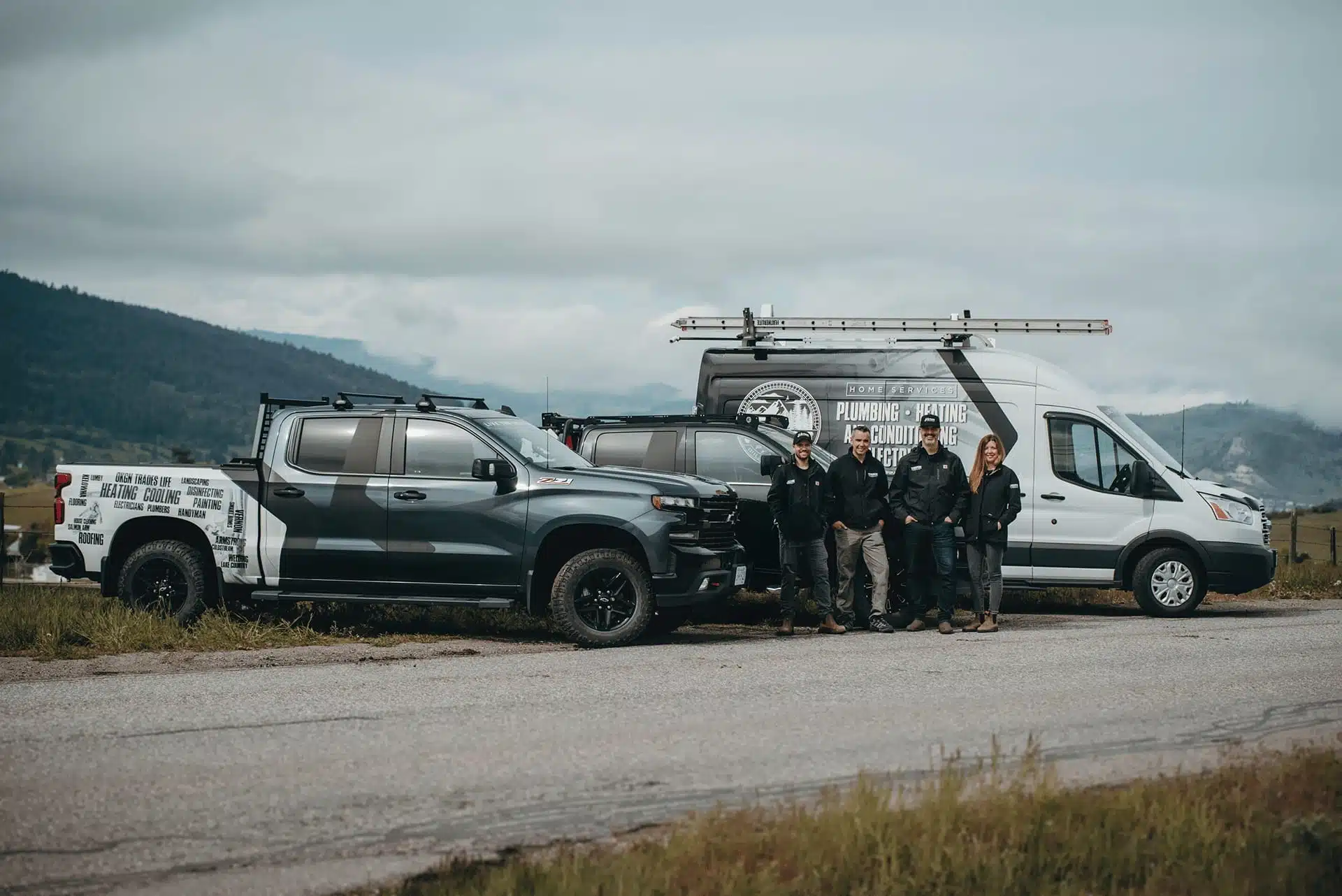
In Canada, the best spot for an air conditioner is usually on the north or east side of your home. This allows the house to naturally shade the unit during peak afternoon heat, boosting performance and reducing hydro use.
Placement also matters for airflow. A condenser needs open space to run the refrigeration cycle efficiently. Without it, the system works harder, costs more, and wears out faster. Keeping these basics in mind helps you ask the right questions when hiring an HVAC contractor and ensures the work is done properly the first time.
If you’re planning an AC install or worried about your unit’s location, call Vernon Air Conditioning, Plumbing & Electrical Services. We serve Vernon, Coldstream, Lake Country, Lumby, Armstrong, and Predator Ridge with same-day diagnostics and professional relocation.
Vernon Air Conditioning, Plumbing & Electrical Services
909 Kalamalka Lake Rd, Vernon, BC V1T 6V4
Phone: 778-403-7886
Need help with AC Installation? Book online or call today for superior service across the North Okanagan.