
Table of Contents
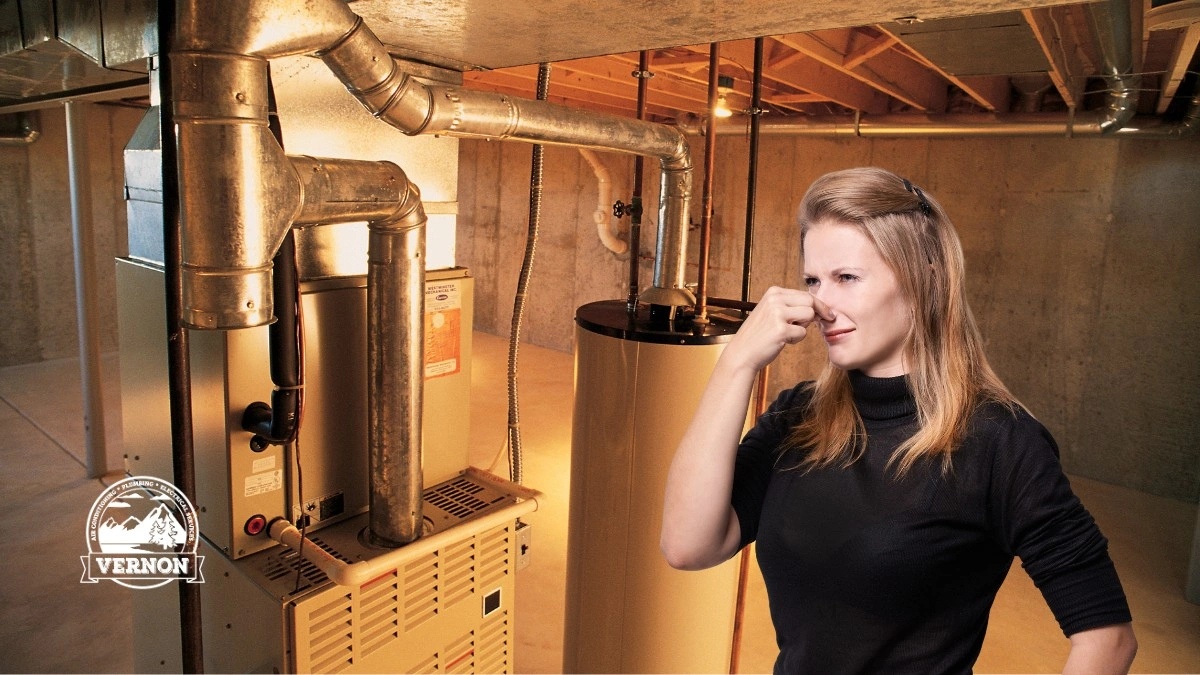
When your furnace gives off a strange smell, it is rarely random. Furnace odors are early warning signs of airflow problems, electrical faults, combustion issues, or moisture buildup. Some furnace smells are regular and temporary. Others indicate a safety risk that needs immediate attention.
Below is a complete, homeowner-friendly guide to common furnace smells in Canadian homes, explaining each smell, what causes it, what you can safely do, and when to stop troubleshooting and call a professional.
🛑 Furnace Safety Warning
Some furnace smells are harmless. Others signal an immediate safety risk. If you smell gas, smoke, strong exhaust, or chemicals, do not try to troubleshoot or “wait it out.”
These smells can indicate a carbon monoxide (CO) hazard caused by venting problems or a cracked heat exchanger. Carbon monoxide is colourless, odourless, and dangerous.
Every home should have working carbon monoxide detectors installed near bedrooms and on each level of the home. Test detectors monthly and replace batteries as needed.
Turn the furnace off at the switch or breaker, ventilate the area, and leave the home if the smell is strong or causes symptoms. Never open gas lines, modify wiring, or bypass safety switches. Contact a licensed HVAC technician or your gas utility immediately.
Burning Dust Smell 🔥
What it smells like: Hot dust or dry burning
When it usually happens: First few heating cycles in fall
What it means: Dust naturally settles on the heat exchanger, burners, and supply plenum during summer. When the furnace runs again, that dust burns off.
Steps ✅
- Let the furnace run for 15 to 30 minutes
- Replace the air filter if it is dirty
Best for: First heating cycles of the season when the smell fades within 30 minutes.
When to worry: If the smell persists for more than 24 to 48 hours or recurs frequently during the season, it may indicate restricted airflow or debris near hot components.
Why it matters: Persistent dust burning reduces efficiency and can overheat internal parts, shortening furnace life.
Rotten Egg or Sulfur Smell 🚨
What it smells like: Rotten eggs or sulfur
What it means: Natural gas is treated with an odorant called mercaptan so leaks are easy to detect. If you smell it, you may have a gas leak.
Steps ✅
- Turn off the furnace immediately
- Do not use light switches, appliances, or open flames
- Leave the house
- Call your gas utility or emergency services from outside
Best for: None. This smell always requires immediate action and evacuation.
Why it matters: Gas leaks create fire and explosion risk. This is always an emergency.
Electrical or Burning Plastic Smell ⚡
What it smells like: Melting plastic, hot wiring, ozone
What it means: Common causes include overheating blower motors, failing capacitors, loose wiring, or control board issues.
Steps ✅
- Turn the furnace off at the switch or breaker
- Call a licensed HVAC technician
Best for: Immediate shutdown and professional inspection before restarting the furnace.
Why it matters: Electrical failures can damage the furnace and pose a fire risk if ignored.
Musty or Moldy Smell 🌫️
What it smells like: Damp basement, mildew
What it means: Moisture is present somewhere it should not be. Common sources include:
- Dirty or wet furnace filters
- Old humidifier pads
- Small condensate leaks
- Moist ductwork
Steps ✅
- Replace the furnace filter
- Inspect and replace the humidifier pad
- Check for visible leaks around the furnace
Best for: Mild, occasional odors that improve after replacing the filter or humidifier pad.
When to call a pro: If the smell persists or spreads through the duct system.
Why it matters: Moisture problems affect indoor air quality and can trigger allergies and respiratory issues.
Dirty Socks Smell 🧦
What it smells like: Musty gym socks
What it means: This is usually microbial growth caused by condensation and organic buildup inside ductwork or furnace components.
Steps ✅
- Change the air filter
- Inspect the humidifier and drain line
- Book professional cleaning if it does not improve
Best for: Early-stage moisture or bacterial buildup that has not spread through the duct system.
Why it matters: Bacterial growth reduces air quality and often signals ongoing moisture issues.
Oil or Metallic Smell 🛢️
What it smells like: Hot oil, metal, or machinery
What it means
Mechanical components such as blower motor bearings may be overheating or wearing out.
Steps ✅
- Turn the furnace off
- Call for service
Best for: Short-term identification only before shutting the system down and calling for service.
Why it matters: Mechanical wear often leads to sudden breakdowns during cold weather if ignored.
Smoke Smell 🚨
What it smells like: Smoke, campfire, or char
What it means: Possible blocked chimney, flue obstruction, or backdrafting that forces combustion byproducts into the duct system.
Steps ✅
- Shut off the furnace
- If the smell is strong, leave the home
- Book a venting and flue inspection
Best for: None. Smoke smells indicate a venting or combustion problem that needs inspection.
Why it matters: Improper venting can allow dangerous gases into living spaces.
Chemical or “Formaldehyde” Smell ☠️
What it smells like: Sharp chemical or solvent odor
What it means: This may indicate a cracked heat exchanger, which could allow combustion gases to mix with household air.
Steps ✅
- Turn the furnace off
- Ventilate the home
- Call a licensed HVAC professional immediately
Best for: None. Treat as a high-risk condition until a professional inspection confirms otherwise.
Why it matters: Cracked heat exchangers are a primary source of carbon monoxide exposure.
Exhaust or Carbon Monoxide Smell ☠️
What it smells like: Exhaust fumes or burning rubber
What it means: Blocked flue, backdrafting, or heat exchanger failure.
Steps ✅
- Turn off the furnace
- Open windows
- Leave the home if symptoms appear
- Call for emergency service
Best for: None. This is always an emergency situation.
Why it matters: Carbon monoxide is colorless, odorless, and dangerous. Smells often indicate associated venting failures.
Quick Reference Table
| Smell | Normal? | Risk Level | Action |
|---|---|---|---|
| Burning dust | Sometimes | Low | Monitor briefly |
| Rotten eggs | Never | Critical | Evacuate |
| Electrical | No | High | Shut down |
| Musty | No | Medium | Inspect moisture |
| Dirty socks | No | Medium | Clean and inspect |
| Oil/metal | No | Medium | Service needed |
| Smoke | No | High | Shut down |
| Chemical | No | Critical | Immediate service |
| Exhaust/CO | Never | Critical | Emergency |
Prevent & Save: How to Avoid Furnace Smell Problems

- Replace filters every 1 to 3 months
- Schedule annual furnace maintenance before winter
- Keep the furnace area clean and unobstructed
- Test smoke and carbon monoxide detectors monthly
Early action prevents breakdowns, protects indoor air quality, and reduces winter repair costs. If you are a homeowner in Vernon or the North Okanagan, Vernon Air Conditioning, Plumbing & Electrical Services can inspect your furnace, identify odor-related issues, and make sure your system runs safely all winter. Call today to book a professional furnace inspection.
📖 Read More: Top 15 Common Heating System Problems (and How to Fix Them in BC Homes)
Vernon Air Conditioning, Plumbing & Electrical Services
909 Kalamalka Lake Rd, Vernon, BC V1T 6V4
Phone: 778-403-7886
Need help with Furnace Repair? Book online today for premium service across the North Okanagan.