Table of Contents
☀️ Does a Solar Powered Air Conditioner Really Work?
We require air conditioning units when the sun beats on our homes and heats the indoor environment. This heating happens due to the vast amounts of energy the sun gives, which are transmitted through absorption and convection.
We are all familiar with this process, and those who live in hotter climates spend significant time and money on technology and house design that can minimize its effects. With so much energy absorbed by your building, harnessing it to cool the inside environment makes sense. This may seem like a novel idea, but solar-powered air conditioning is a growing market that may soon rival electric-powered air conditioning.
But how do solar-powered air conditioners work, and how do they rank in effectiveness and energy efficiency compared with conventional air conditioners?
☀️ The Heavy Environmental Cost of Air Conditioning

Americans spend a phenomenal amount of money on cooling their homes every year. Energy.gov estimates that as much as $11 billion of our hard-earned salaries goes toward powering air conditioners. Given that around 87 percent of us have air conditioners in our homes, it should be no surprise that the average cost to run one is almost $300 per household a year.
This figure represents around 12 percent of the total domestic energy expenditure.
Not only are air conditioning costs hurtful to our finances, but their high energy demands are also terrible for the environment. The heavy energy use of air conditioning in the United States alone contributes an estimated 140 million tons of carbon dioxide annually. At a time when working toward becoming carbon-neutral is at the forefront of domestic and international policy (this includes us as well, Canada…).
The massive energy consumption required for keeping us cool in our homes needs to be addressed sooner rather than later, and solar air conditioners could be the solution.
☀️ How Do Solar-Powered Air Conditioners Work?
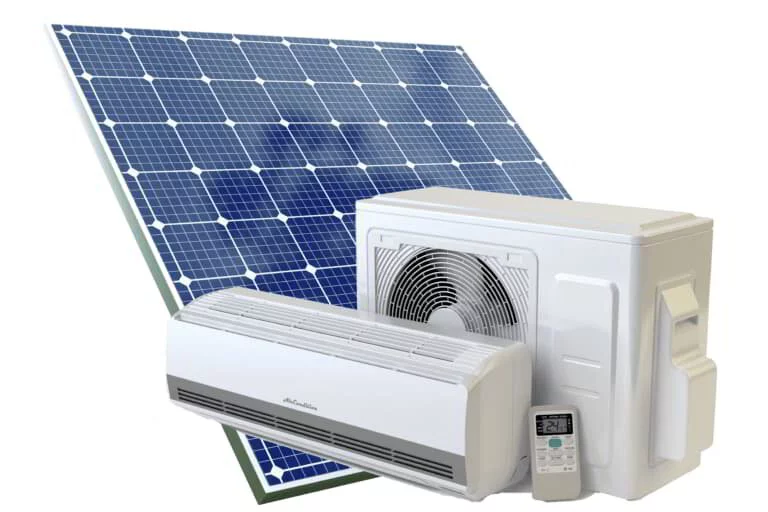
There are several solar air conditioners, although many are not yet available in consumer markets. Nonetheless, three types have become common in residential buildings in the last few years:
Solar Photovoltaic (Solar PV) Air Conditioners
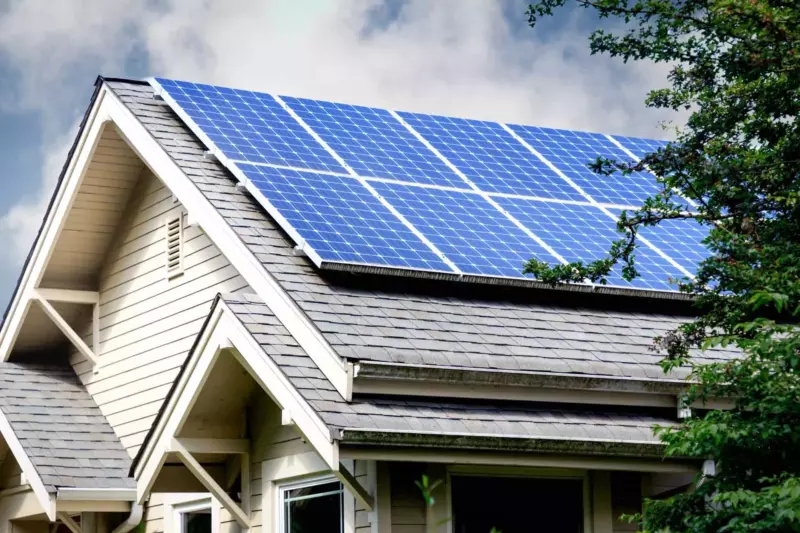
These systems capture the sun’s solar energy using solar photovoltaic panels, usually mounted on a building’s roof. Solar PV panels convert solar energy into electricity, which powers all the constituent parts of a traditional split system. The electricity that is not used is stored in a battery array for later use.
In addition, some hybrid air conditioner systems are connected to the electricity grid to provide an extra boost if the sun is not strong enough to charge the batteries.
Solar Thermal Systems
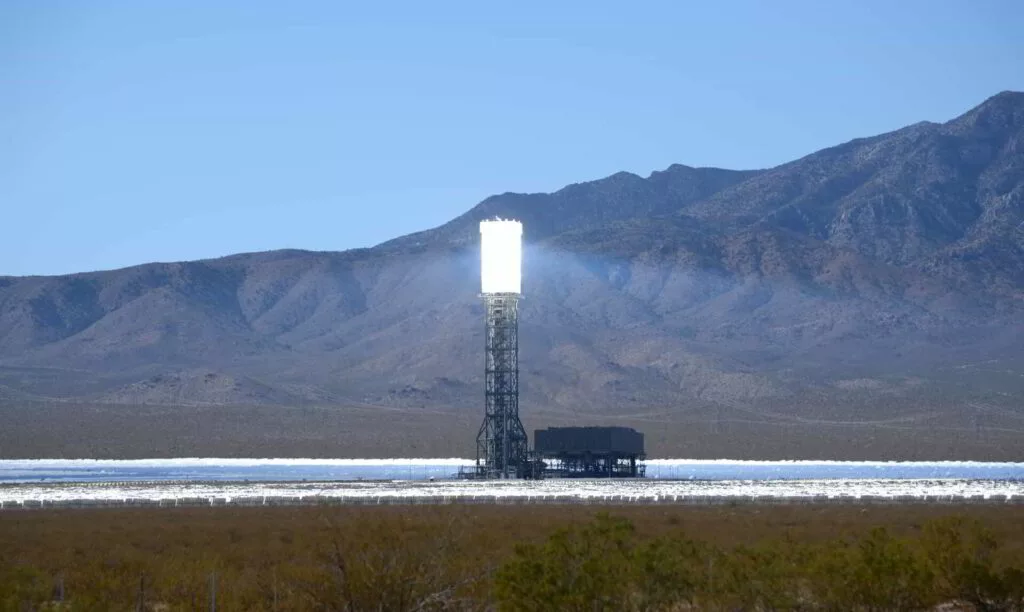
These systems employ a plate to capture solar energy from the sun’s rays. This energy then directly works to turn an electric generator to power the compressor responsible for the refrigeration process in the air conditioning system. Solar thermal systems use electricity from the grid to run the fans and the electric control panel. However, this system is quickly falling out of fashion since they are less energy-efficient than solar photovoltaic systems.
Absorption Chillers
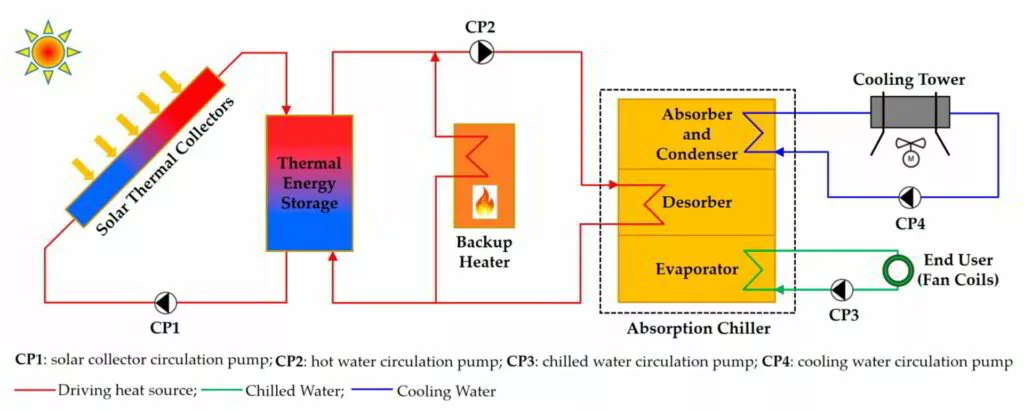
These systems use solar power from solar panels to drive the fan and compressor motor in systems that use evaporation and condensation to generate cool air. Absorption chillers can run off batteries that solar panels have charged.
☀️ Are Solar-Powered Air Conditioning Systems Effective?

It may come as a surprise to you to learn that solar-powered air conditioning systems work just as well as conventional ones. As long as you have enough sunlight (which will normally be the case since the system is only likely to be used on a hot, sunny day anyway), a solar air conditioning is equally effective at cooling an indoor space as a mains electric powered system.
In the rare event that you need to turn on the air conditioning on a cloudy day, solar air conditioner systems use a battery array for power. The batteries in this array are charged with the excess energy collected by the solar panels on a hot day.
☀️ How Much Can I Save with a Solar AC System?
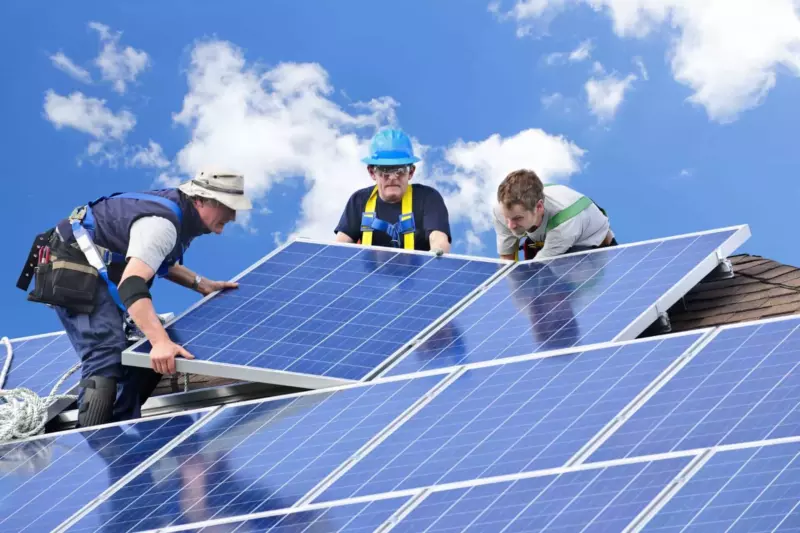
Installing a solar-powered air conditioning system requires a substantial initial outlay.
However, the cost of having solar panels, battery arrays, converters, and wiring set up at your home will eventually be offset by the considerable savings you will make on energy bills.
The total amount that you will save will depend on several factors.
- First, the solar panels’ number, size, and energy-capturing capabilities will determine the proportion of an air conditioning system’s energy use met with solar power. A hybrid solar system still has a grid connection.
- Second, the size and carrying capacity of the battery array are important. Battery technology has advanced rapidly in the last few years. In basic terms, the more energy your battery can store from solar power, the more it can supplement your air conditioning system’s energy demands.
- Third, how much you use the air conditioner will impact how much you can save. In hotter climates, you will need a system capable of running for longer. However, these requirements should be offset to a certain degree by the greater amount of sunlight that can be harvested. A hybrid solar system may not be needed.
☀️ Thinking About Solar-Powered Cooling?

Solar power can offset a significant portion of your home’s cooling costs, sometimes covering nearly all of it with the right setup. Whether you’re looking to reduce your energy bill or move toward a more sustainable home, solar-powered air conditioners or heat pumps are a smart investment that can pay for themselves over time.
If you live in Vernon, Kelowna, or anywhere in the North or Central Okanagan, talk to the experts at Vernon Air Conditioning, Plumbing & Electrical Services. Our certified technicians can help you design and install the right solar-powered HVAC solution for your home.
Ready to go solar? Contact us today and take the first step toward cleaner, more affordable comfort.