
Table of Contents
⭐ How To Get a Fair Price on a New HVAC System
Most of our article topics come from customer questions in the field. A few questions are asked more often than about the cost of a fair heating and cooling system. The combined cost of a new furnace and air conditioner can vary significantly depending on the brand and model chosen, as well as a few other factors.
As such, today we will discuss a couple of factors that affect the cost of your HVAC system. Then we’ll take a look at some of the more common prices for a furnace and AC combination. Finally, we’ll show you how to make sure you get the best value on your new installation.
⭐ Furnace Air Conditioner Combo Cost – The Factors
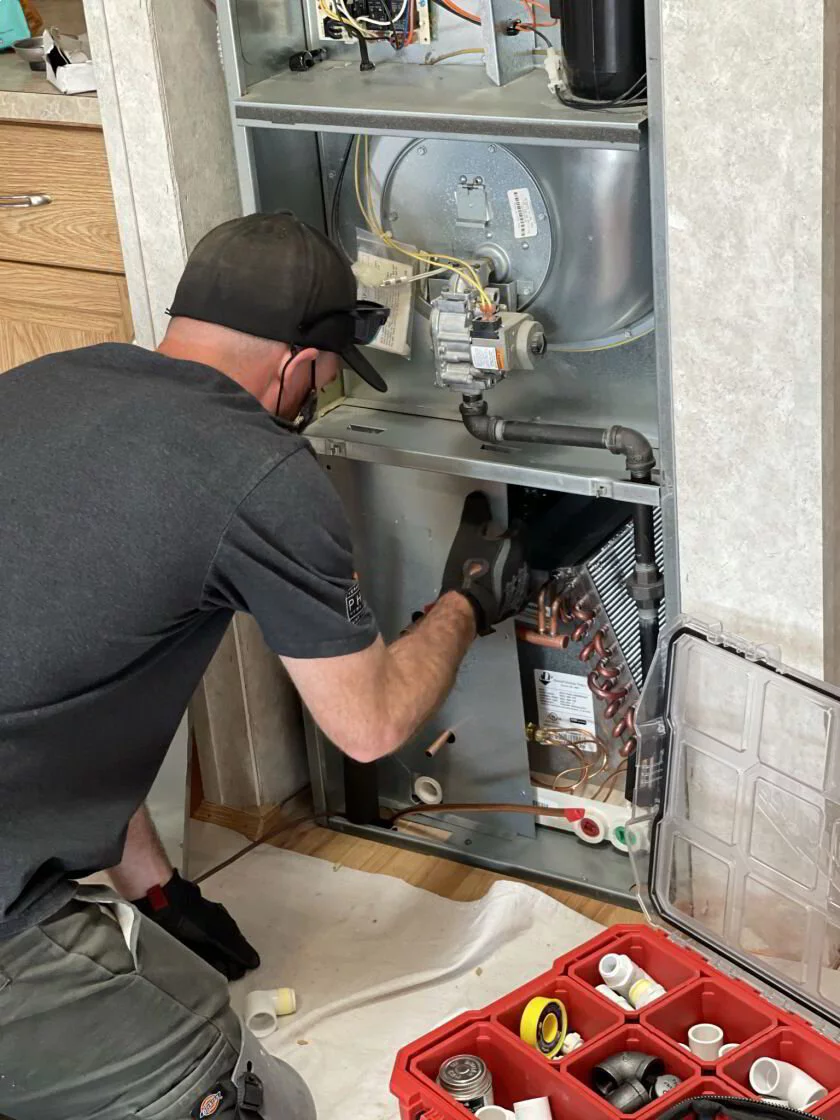
There are a multitude of factors that can affect the cost of an entire HVAC system installation. This section will discuss a few key points and help you get started on the right foot.
Just remember that the furnace and AC combination cost of your specific installation will have multiple variables, so the best thing you can do is to pick one (i.e., which HVAC unit brand you want), research it to death until you figure out which one you want, and then move on to the following variable.
If you start trying to figure out all the variables at once, you’ll quickly find yourself overwhelmed and having flashbacks of differential equations from school…
Don’t worry; I’ll do my best to keep that from happening (and hopefully avoid a flood of emails from loyal readers). If you’re already bored, don’t worry…my articles exponentially increase in sarcasm as you continue reading…
Factor 1: What HVAC System Brand Should You Choose?
The brand of a residential HVAC unit can highly affect your combo cost. Some brands are significantly more expensive than others. Still, it is important to note that all modern air conditioners and furnaces (from major brands) are equally reliable, so long as they are installed and commissioned properly.
Knowing which brands provide the best value – at the lowest price – is a significant factor in keeping costs down. Let’s take a look at some average prices for central air conditioners by brand:
Average HVAC Cost by Brand, From Lowest to Highest Price:
Please note that this list is not extensive and is based on average national pricing across the United States.
- Day & Night
- Goodman
- Bryant
- Coleman
- Rheem
- Amana
- York
- American Standard
- Carrier
- Trane
- Lennox
The cost of the furnace and AC combination for your installation can be significantly reduced by as much as 40% simply by selecting the right HVAC unit brand for your home.
But, you might be asking, why is Day & Night less expensive than Lennox? Well, Day & Night is a sub-brand of one of the other more expensive HVAC unit brands. They are made by the Carrier Corporation.
The same company owns Arcoaire, Beretta, Bryant, Comfortmaker, Day & Night, Heil, Keeprite, and Tempstar in the HVAC space. However, sub-brands like Day & Night are usually made in overseas factories that operate with lower overhead expenses.
Most models are made with the same internal components as their Carrier counterparts, including internal coils manufactured by Aspen Coils.
Another example is Goodman, which is manufactured by the same company as Amana. Knowing these little marketing tricks is the key to getting a good deal on your HVAC installation. Food for thought.
✅ PRO TIP: I will say that from my experience, I would recommend going with a brand that sits in the middle of the “marketing” pricing structure. The low-cost tier of HVAC units is typically manufactured overseas, whereas the top two tiers are produced in North America.
Before making a decision, research the furnace and AC brands offered by contractors in your area.
One of the most important variables in your decision is whether the brand is supported locally by an HVAC parts supplier.
For instance, Goodman might be your favorite brand, but it doesn’t really matter if no one in your area installs them or if there’s a parts supplier to provide repair components. As such, researching brands is one of the key ways to keep your HVAC unit costs down.
Factor 2: What Energy Efficiency and Features Should You Choose?
The efficiency and features you choose for your new AC unit and heating system will affect your costs.
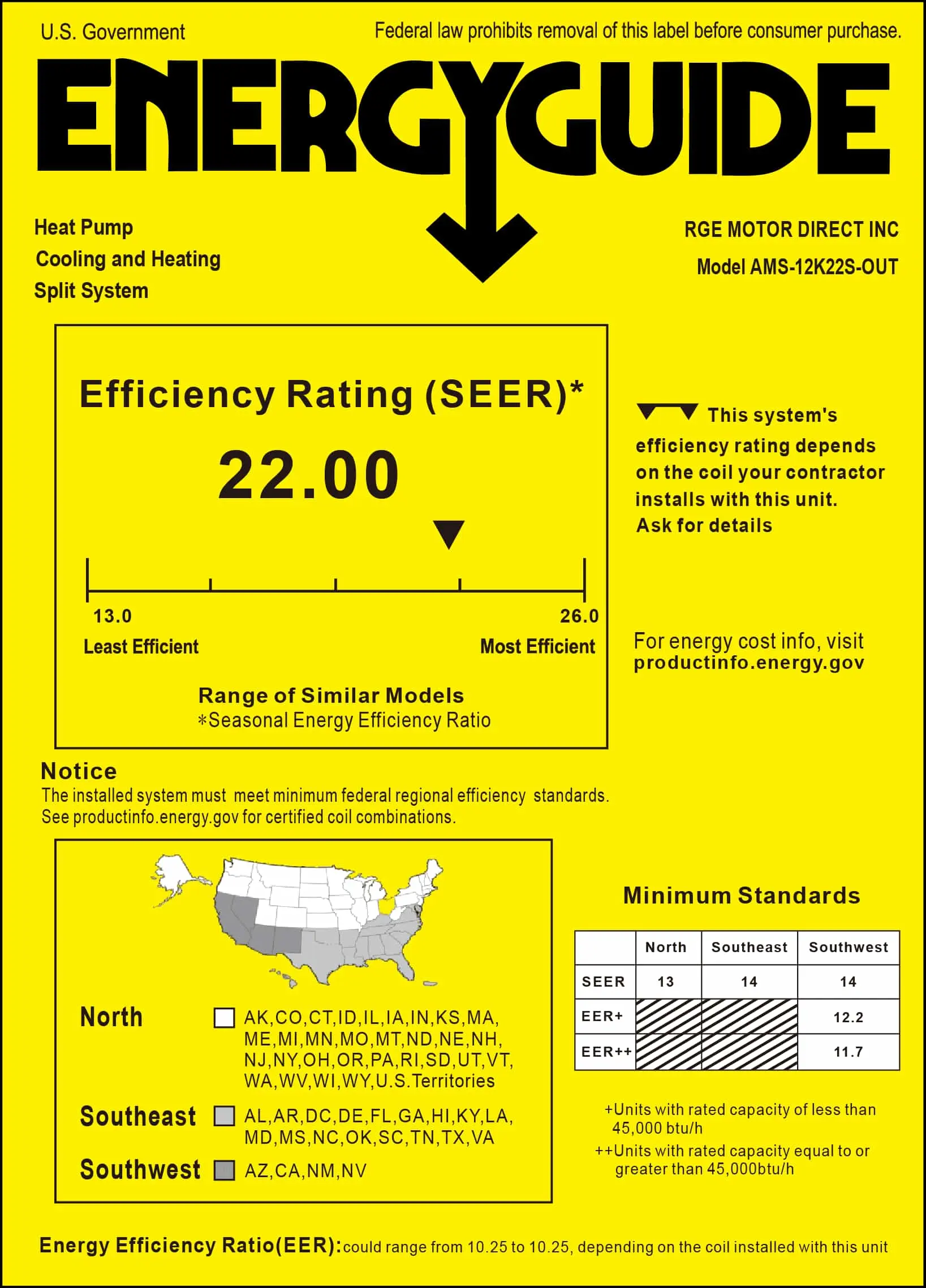
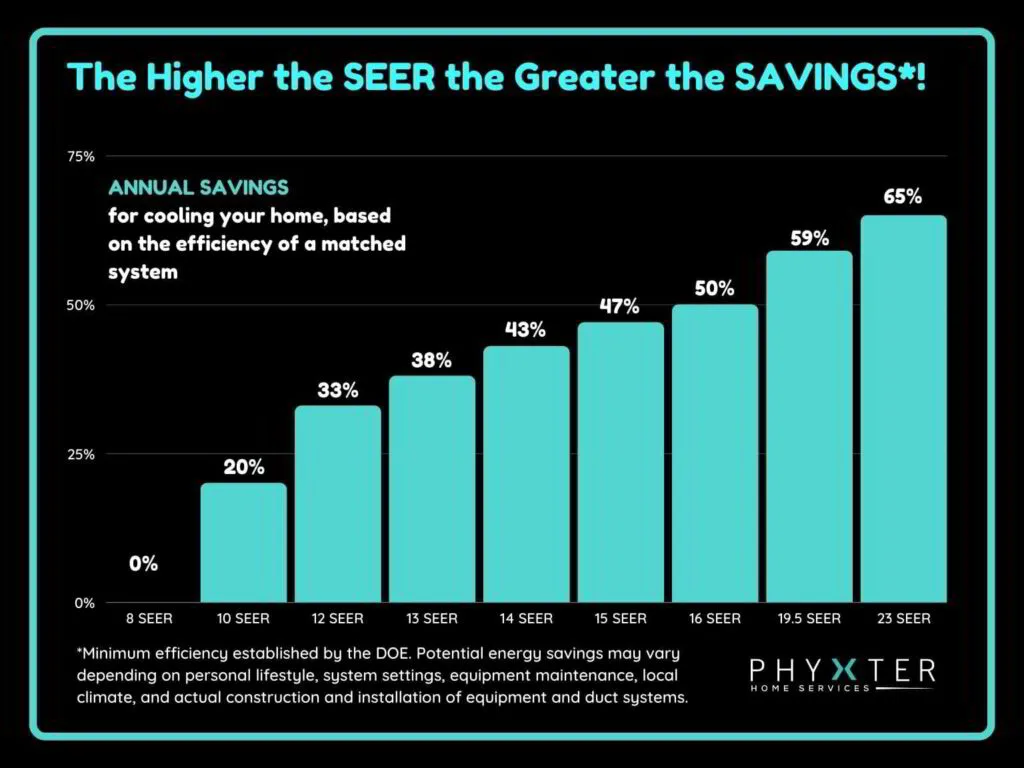
In most cases, paying thousands of dollars extra for a 21-SEER AC unit doesn’t make sense, but there are many scenarios where it would. Be sure to consult with multiple HVAC contractors before making your decision.
We rarely recommend investing in air conditioners with an efficiency rating above 14 or 16 SEER for average-sized homes, as the monthly energy savings wouldn’t offset the additional expense. Additionally, lower SEER units are typically simpler and have a lower propensity for breakdowns and service calls.
They are also significantly cheaper to fix when they do break. As such, when you factor in the additional price of repairs on high-SEER air conditioning systems, the lifetime price to own one actually ends up being more expensive.
Delving into the differences between different SEER values is outside the scope of this article, so here is an article on SEER ratings that will help explain what they are and which air conditioning system you should choose for your home.
⭐ What SEER Value is Best for My Home?
Likewise, furnaces have various energy efficiency ratings and are measured in Annual Fuel Utilization Efficiency, or “AFUE.” As with air conditioning systems, AFUE should be taken with a grain of salt. Unless you live in a region that regulates minimum AFUE requirements.
An 80% AFUE furnace can typically be more than enough if you live in a southern state. If you live in a northern climate, you may want to consider a furnace with an AFUE rating of 90% or higher. Unlike an AC system, however, furnaces are less likely to break down.
Therefore, it is worth spending the extra money on higher efficiency, but only if you truly need it. If you live in Alabama, for instance, purchasing a 96% AFUE furnace isn’t necessary and will only increase the cost of your HVAC system installation.
Related Reading: What is AFUE? Annual Fuel Utilization Efficiency Rate Explained
⭐ How SEER & AFUE Can Affect Your HVAC Installation Cost
Basic SEER and AFUE Rating
A basic 80-90% AFUE-rated furnace combined with a 13-15 SEER combo system installed would start around $7,000 and go up to $12,000, depending on your geographic area. You might think this is a large price range, but you need to consider the cost of living variances across Canada and the United States.
Better SEER and AFUE Rating
The next step up would be a 94-97% AFUE-rated furnace combined with a 16-20 SEER combo system, which would cost around $9,000 and range up to $15,000.
Some of the benefits of a system like this might include a variable-speed blower motor on the furnace and a lower decibel rating on the outdoor AC condensing unit.
Best SEER and AFUE Rating
The top-tier system would be a furnace with an AFUE rating of 97-99%, which matches an AC system with a SEER rating of 19-26. The cost of this system would range between $11,000 and $20,000.
✅ PRO TIP: The British Thermal Units (BTU) rating of the furnace and the AC’s tonnage rating will also significantly impact the system’s price.
Related Reading: EER VS SEER: How to Use EER and SEER to Compare AC Units
Factor 3: Choosing the Right HVAC Contractor
We’ve shown you how being well-informed on the brand and efficiency values you choose can affect the installation costs of your new furnace and AC combo, so now let’s talk about contractors. Unfortunately, it only takes a few bad apples to spoil the bunch…
Let’s discuss how selecting the right HVAC contractor can impact your combined installation costs. Let’s assume you’re a responsible shopper and will obtain at least three quotes for your dual-fuel system replacement.
Now, after you get your three quotes, you’ll need to determine the winner by more than just the price. Let’s take the three quotes below as examples and work through how to decide which one to choose.
Change-Out Prices:
- 1st Contractor: $12,300
- 2nd Contractor: $7,790
- 3rd Contractor: $9,113
First, assume all three quotes are for similar AC and furnace combo brands with the same SEER and AFUE ratings. So, aside from the price variable, what else should you consider?
- Reputation: always check their ratings and reviews online. Whether it’s Google, Yelp, or a similar platform.
- Warranty: The parts warranty should be similar for each brand and at least cover you for 10 years. The labor warranty is what sets apart the good from the bad. Shoot for a contractor with a standard labor warranty of at least one year.
- Schedule: This is based solely on the timeframe for system installation. You might choose the more expensive option because the HVAC company has more availability.
- Features: Ensure that each quoted system has the same features, such as variable speed technology or a single-speed blower motor.
- Add-ons: Is one contractor providing a new Wi-Fi thermostat, while the others aren’t? Or is one contractor installing a new duct seal on the plenums, while the others aren’t?
- Price Accuracy: Ensure that everything required to complete the installation is included in the quote, in writing.
- Insurance: Always confirm that all of the HVAC companies have active insurance.
- Licenses: Always confirm that licenses are up to date and that dues are paid.
- Experience: This doesn’t always mean that the most experienced contractor is the best, but if the contractor has an excellent reputation and tons of experience, you can feel confident that they’ll look after you.
- Years in Business: Again, this isn’t a deal breaker, as new businesses can provide great service and value. The only concern with new businesses is whether they’ll be in business to support you in the future.
- Customer support: This is something that you’ll definitely be paying for. If a company can afford 24/7 support staff, its overhead prices will be higher, and thus its pricing will be as well.
⭐ Average HVAC Replacement Cost – Fair Prices
You’ve seen in our examples above how addressing these main factors can save you thousands on your air conditioner and gas furnace. Now, for impatient individuals, let’s examine some fair prices for your installation.
Please note that this article provides estimates and general guidelines from across the country, but we cannot guarantee accuracy.
There are too many variables to provide exact prices for every job, such as your geographic location, square footage, required SEER and AFUE, the number of stories in your home, average temperatures, and others.
⭐ AC Combo Cost Factors for Expensive States
Look, places like California and New York are some of the most expensive places to spend money. Why not? They are nice once you get over the morning interstate traffic. Unfortunately, that also means they are more costly to do business in due to higher taxes and increased bureaucracy, including more permits and fees.
Typical Combo Cost for a 14 SEER, 80% AFUE System:
- Average Furnace and Air Conditioner Combo Cost: $5,121
- Materials and Other Miscellaneous Expenses: $1147
- General Liability Insurance, Workman’s Compensation Insurance, etc.: $767
- Labor: $732
- Total Cost to Contractor: $7,767.00
- Profit (40% average, out of which they still have to pay taxes and administrative fees): $3,106.80
- Total Combo Cost of Installation: $10,873.80
AC and Furnace Combos for the Red States:
I’m not making a political joke (well, I am). Still, doing business in the red states is typically much less expensive. As such, you can expect your furnace and air conditioner combo cost to be slightly less. Let’s take a look:
Typical Combo Cost for a 14 SEER, 80% AFUE System:
- Average Combo Cost: $4,287 (fewer taxes on equipment)
- Materials & Other Miscellaneous Expenses: $817
- General Liability Insurance and Workman’s Compensation Insurance, etc.: $501
- Labor: $688
- Total Cost to Contractor: $6,293.00
- Profit (40% average; the red states still have to pay taxes and administrative fees): $2,517.20
- Total Combo Cost of Installation: $8,810.20
⭐ Analysis of the Average HVAC Installation Costs
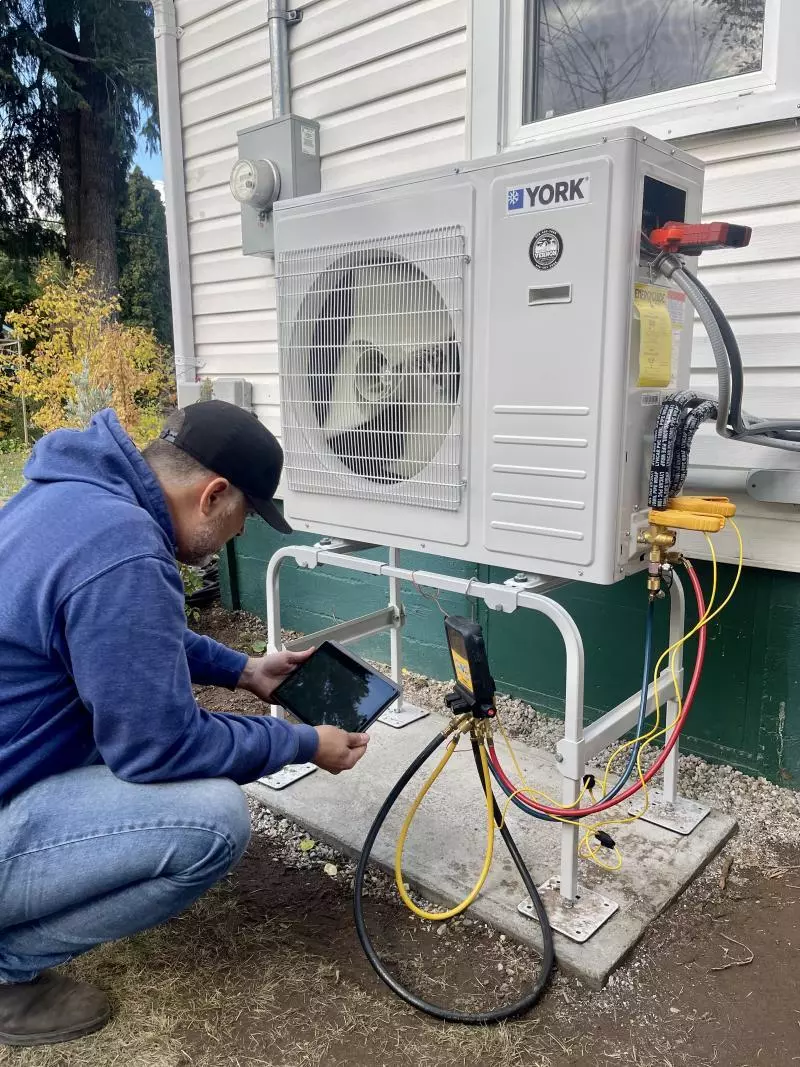
As you can see, the costs of the furnace and AC can vary significantly by region. As an additional note, if you are considering starting your own HVAC business, you may want to consider relocating to a low-tax state like Texas, where there are fewer tax burdens.
The moral of the story is that by controlling the brand you choose, the SEER and AFUE values you purchase, and the contractor you prefer, you can significantly affect your installation price. However, as you can see in the examples above, some things are outside your control, like where you live.
The example above used average data to calculate a fair installation price. It was about $800 cheaper by separating some of the more expensive states.
You may also be interested in an article that compares heat pumps to a gas furnace. Heat Pump vs Furnace – The Pros and Cons of Each Heating Type
⭐ Final Thoughts on Getting a Fair AC & Furnace Combo Cost

When replacing your HVAC system, it pays to do your homework. Start by choosing a reputable contractor, then decide on the brand and efficiency level that fits your needs and budget.
These decisions can significantly lower your total HVAC combo cost—not just upfront, but over the life of your system. Remember, the cheapest option isn’t always the best. A quality installation by a trusted contractor ensures your new AC and furnace run efficiently and reliably for years to come.
If you’re in the North Okanagan and want expert guidance with honest pricing, call Vernon Air Conditioning, Plumbing & Electrical Services. We’ll help you get the right system for your home, installed the right way.
Want to learn more about heating and cooling? Explore our other HVAC articles for practical tips and advice.