
Table of Contents
Not many people consider why the furnace room exists, but there are multiple reasons for its existence. For one, every home has mechanical equipment that probably doesn’t match its design style, so the best way to hide it is to cram it all into one small room in the basement.
Secondly, mechanical equipment uses electricity and combustible fuels, which can be hazardous if not installed in accordance with local safety codes. Therefore, instead of applying all those strict safety codes to the entire home, we can confine them to the basement furnace room (sometimes referred to as a utility room).
As much as I would love it if there were set guidelines for furnace room safety codes, every municipality usually has its own. They will be similar, but it’s extremely important that you do not attempt to DIY install your mechanical equipment, as you must be aware of the specific codes for your municipality.
With that said, below are some key requirements you should be aware of.
Key Takeaways
- Adhere to Local Safety Codes: Always hire professionals to install and maintain furnace room equipment to ensure compliance with specific municipal safety codes.
- Maintain Clearance: Ensure adequate clearance around equipment for both safety and service access.
- Provide Combustion Air: Ensure proper ventilation or direct piping for gas-fired equipment to facilitate complete combustion.
- Avoid Storing Hazardous Items: Do not store combustible materials, chemicals, or items that can produce harmful fumes in the furnace room.
- Keep the Area Clean: Regularly clean and keep the furnace room free of dust, debris, and unnecessary items.
⭐ General Safety Code Requirements for Furnace Rooms
1. Clearance Requirements for Mechanical Equipment
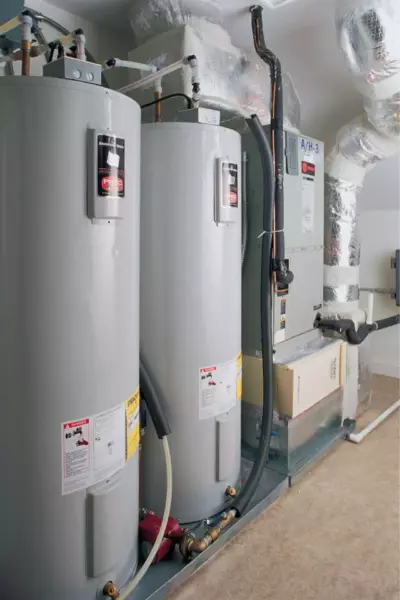
There are two reasons that clearance requirements are important:
- Clearance to combustible materials
- Clearance for service access
Clearance to Combustible Materials
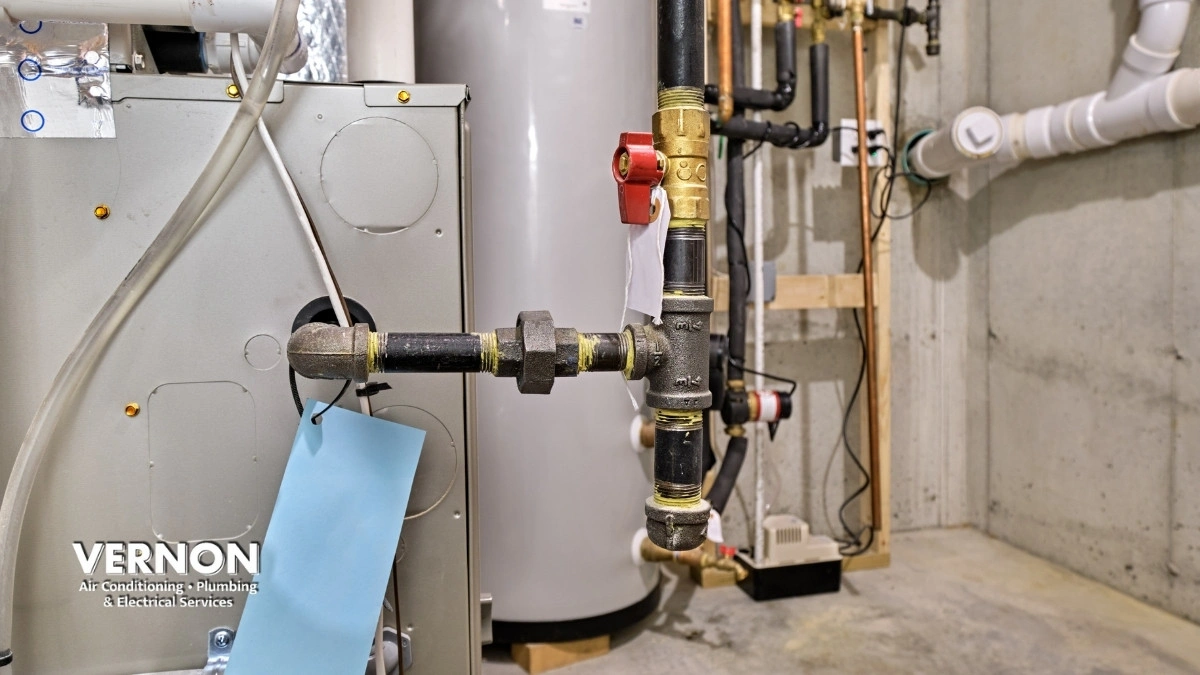
Most furnace rooms include more than just a furnace. They also have a water heater, air conditioning coils, heat pump, plumbing, gas, and drain lines.
The water heater and furnace typically utilize energy sources such as natural gas, propane, oil, wood, or electricity. When these energy sources are employed, they generate a substantial amount of heat that is transferred to the medium being heated (air or water).
Due to this intense heat, equipment manufacturers always recommend a minimum clearance of combustible materials. That figure will be listed in the equipment’s installation manual.
Clearance for Service Access
This is the clearance that is usually not provided for, and to be honest, I can understand why. As much as it’s important to be able to properly service a piece of equipment, every square foot of a home is expensive to build, and building enough space for an HVAC technician or plumber to easily access all sides of the equipment is hard to justify.
2. Combustible Air for Gas-Fired Equipment

There are three primary methods for providing combustion air to gas-fired equipment: supplying fresh air to the room, utilizing room air, and direct piping of the combustion air. If the room in which the equipment is located is large enough (this size needs to be calculated by a professional HVAC technician), then there will be sufficient air available for the equipment to achieve complete combustion.
If the room isn’t large enough, it won’t have proper ventilation, so a duct must be installed that goes directly from outside to the furnace room. This duct needs to be sized by a professional HVAC contractor.
If the furnace is a high-efficiency model, it will have two pipes exiting it (2″ or 3″ high-temperature-rated PVC). Some installers will only install one pipe for the flue gases, but I would always recommend installing the second pipe to provide direct combustion air to the equipment.
3. Energy Efficiency Requirements

“The times they are a-changin”, and furnace and air conditioner efficiency are becoming one of the easiest ways for a home to reduce its carbon footprint.
Local and federal governments set minimum efficiency requirements in 2023, so it’s important that you work with a contractor who knows those requirements. Keep in mind that the minimum requirement is just that, the minimum. Many upgrades are available to increase equipment efficiency, helping you reduce your monthly utility bills.
Another aspect to consider when deciding on what new equipment to get is system capacity. Just because your old furnace was 100,000 BTU/hr doesn’t mean that your new one should be the same size.
Older furnaces are typically between 70% and 80% efficient, whereas newer, high-efficiency models are above 95%. Therefore, you can reduce the installation price of your new system by decreasing its capacity.
This is a simple concept, though, and there are more variables to consider, so discuss this idea with a reputable HVAC contractor before making a decision
⭐ What’s in a Furnace Room
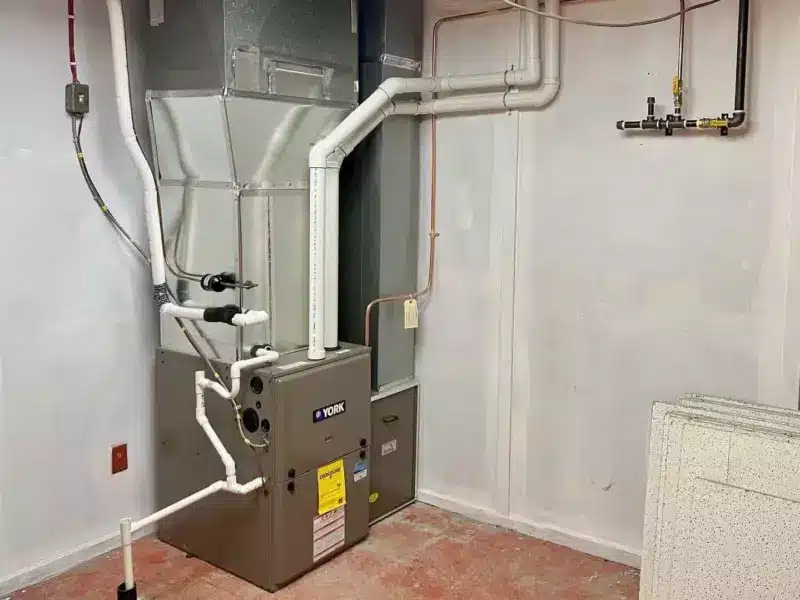
In most residential furnace rooms, you’ll have the furnace, the air conditioning evaporator coil, the water heater, and the electrical panel. Sometimes, people will use the furnace room as their laundry room. Now, since there’s some extra space in the furnace room, people will add storage shelves and put anything they can in there. But should they?
✅ PRO TIP: It’s always a good idea to keep the area around your furnace free from dust and debris.
Also, keep some spare furnace filters on hand so you never forget to change them.
✅ PRO TIP: Date your filter when you install it. This will help you to track how often it should be replaced. Plus, if you forget to change it and call a service technician out, they can make fun of you for how long it’s been there.
✅ PRO TIP: Ensure the furnace filter is installed correctly.
⭐ What Not to Store in Your Furnace Room

Your heating equipment features internal, heavy-duty metal heat exchangers to help them withstand the high temperatures generated during the combustion process. These heat exchangers are susceptible to chemicals and fumes that can cause them to prematurely corrode and rust, increasing the potential for carbon monoxide poisoning.
Some of the things that should never be stored in a furnace room are:
- Kitty Litter
- Cleaning and Laundry Detergents, unless stored in closed, airtight containers
- Paints or Paint Thinners
- Anything combustible like gasoline
✅ PRO TIP: Avoid hanging laundry to dry in the furnace room, as high humidity levels can create a breeding ground for rust.
⭐ Key Takeaways About Your Furnace Room

If there’s one thing to take away from this article, it’s that gas-fired furnaces are governed by strict safety codes, so always trust a licensed HVAC professional to handle the work. Also, keep the area around your furnace clear of clutter and chemicals. This simple habit can help prevent system damage and reduce the risk of carbon monoxide exposure.
If you’re in Vernon or the North Okanagan and need expert help with your furnace or HVAC system, get in touch with Vernon Air Conditioning, your local home comfort specialists.