
Table of Contents
How to get your BC home ready for bidirectional EV power
V2X technology is quickly becoming one of the most talked-about features in new EVs, especially as Hyundai and Kia accelerate their plans for vehicle-to-home (V2H) and vehicle-to-grid (V2G) functionality. For Canadian homeowners, particularly in regions with winter outages, peak-rate periods, and rural distribution lines, this technology has major potential.
This guide explains how V2X works, what’s different in Canada, and how BC homeowners can prepare their electrical systems for the shift to bidirectional EV power.
The information in this guide is based on the latest update from Hyundai Motor Group regarding upcoming V2X, V2H, and V2G capabilities. As this technology continues to evolve, software timelines, certified chargers, and utility requirements may change as Hyundai, Kia, and Canadian utilities expand their programs.
You can read Hyundai’s official announcement here:
Hyundai Motor Group — V2X Technology Update
⚡ Electrical Safety:
All V2H/V2G components — including bidirectional chargers, transfer switches, and backup gateways — must be installed by a licensed electrician. High-voltage EV systems should never be modified without proper certification, permitting, and utility approval where required.
1. What V2X Means for Canadian Homeowners
V2X (Vehicle-to-Everything) refers to bidirectional energy flow, where your EV can draw energy from the grid and send power back out when needed.
The parts that matter in Canada are:
- V2H (Vehicle-to-Home):
Your EV powers your house during outages or peak pricing windows. Useful during BC Hydro’s winter storms and rural distribution faults. - V2G (Vehicle-to-Grid):
Your EV provides energy back to the grid through a utility program. Canada is in early testing, with pilot programs underway in provinces like Ontario and Nova Scotia. - V2L (Vehicle-to-Load):
Let’s you plug in tools, appliances, or camping gear directly into the vehicle already active today on Hyundai/Kia models.
Because BC’s grid is primarily hydroelectric, outage scenarios are the most significant homeowner use-case for V2H.
2. Hyundai & Kia EVs in Canada With V2X-Capable Hardware
Hyundai and Kia already offer V2L (Vehicle-to-Load) on several Canadian models, and their latest announcement confirms that full V2H and V2G will be enabled through software updates paired with certified bidirectional home chargers.
In Canada, the models that currently support V2L and contain the necessary hardware for future V2H/V2G (E-GMP platform) are:
Hyundai (Canada)
- Ioniq 5 (2022–2025)
- V2L active today
- Built on E-GMP → hardware ready for V2H/V2G
- Ioniq 6 (2023–2025)
- V2L active
- E-GMP platform → V2X-ready
- Kona EV — New Generation (2024–2025)
- Supports V2L
- Not on E-GMP → V2H/V2G not expected unless Hyundai updates its plans
- Ioniq 7 (upcoming)
- E-GMP platform → expected to launch with bidirectional capability in place
Kia (Canada)
- EV6 (2022–2025)
- V2L today
- E-GMP platform → V2H/V2G support expected
- EV9 (2024–2025)
- V2L today
- E-GMP platform → part of early global V2G pilots
- Niro EV (2023–2025)
- Supports V2L
- Not E-GMP → no confirmed V2H/V2G capability
Key Takeaway for Canadian Homeowners
Only E-GMP platform vehicles — the Hyundai Ioniq 5/6/7 and the Kia EV6/EV9 — contain the bidirectional hardware required for future V2H and V2G. These models are the focus of Hyundai’s V2X rollout.
If you own a 2025 Hyundai Ioniq 5, you are already positioned for full V2H capability once Hyundai releases the software update and Canadian-certified bidirectional chargers become available.
3. Why V2X Makes Sense in British Columbia
BC homes benefit from V2X for three reasons:
Winter Outages
The Okanagan often sees windstorms, heavy snow, and rural outages. A V2H-enabled EV can power essential loads for hours or even days, depending on the battery’s size.
Peak Demand Management
As BC Hydro expands time-of-day pricing, V2H and eventually V2G could help homeowners shift usage to off-peak windows.
Renewable Grid Integration
Electricity in BC is already nearly 100% renewable. Using EVs for short-term grid support could become part of the future provincial energy strategy.
4. Step One: Check Your Home’s Electrical Capacity
Before V2H becomes widely available in Canada, homeowners should confirm their electrical system is ready.
Important checks:
- Panel Rating: Many homes in Vernon, Coldstream, Armstrong, and surrounding rural areas still have 100A panels, which may require upgrading.
- Breaker Space: Bidirectional chargers need dedicated breakers.
- Age of Panel: Panels older than 25–30 years may not meet current safety standards.
- Essential Circuit Planning: For V2H, a backup subpanel is usually recommended for:
- furnace blower or heat pump air handler
- fridge
- lighting circuits
- internet modem
- select outlets
A licensed electrician should handle all assessments. V2X equipment deals with high-voltage power transfer.
5. Step Two: Understand the Required Hardware

Canadian V2H installations will require components certified to CSA and UL/ULC standards:
1. Bidirectional Charger (UL 9741 certified)
Handles both charging your EV and sending power back to your home.
2. Backup Gateway or Transfer Switch (UL 1741-SB)
Automatically isolates your home from the grid during V2H operation.
Canadian utilities require this to prevent back-feeding onto power lines.
3. Smart Energy Controller
Optional but useful for load management and future time-of-day shifts.
4. Subpanel for Essential Loads
A cleaner, safer method for emergency backup.
Canadian Certification Requirements
In Canada, all V2H and V2G equipment must meet national electrical safety standards. This includes certification through CSA, cUL, or ULC, as well as compliance with UL 9741 (bidirectional chargers) and UL 1741-SB (interconnection systems such as transfer switches and backup gateways).
Compatibility with BC Hydro, FortisBC, and municipal utilities is also required as V2X programs roll out across the country.
6. Step Three: Check Utility Requirements in Canada
In British Columbia:
- V2H does not currently require approval from BC Hydro or FortisBC because it operates behind the meter.
- V2G will require utility participation, and programs are still in development.
- Some municipalities may require electrical permits specifically referencing bidirectional equipment.
Canada is also moving toward aligning with IEEE 1547 interconnection standards, which will affect V2G timelines.
7. Step Four: Estimate Canadian Installation Costs
Costs in Canada vary by region and permitting requirements, but typical ranges are:
- Panel upgrade: $2,000–$5,500
- Backup subpanel: $600–$2,000
- Bidirectional charger: $3,500–$6,000 (early pricing)
- Transfer switch or gateway: $1,200–$2,800
- Installation labour: $1,200–$3,500
Expect prices to drop as Canadian-certified chargers enter the market.
8. Do You Still Need a Home Battery in Canada?
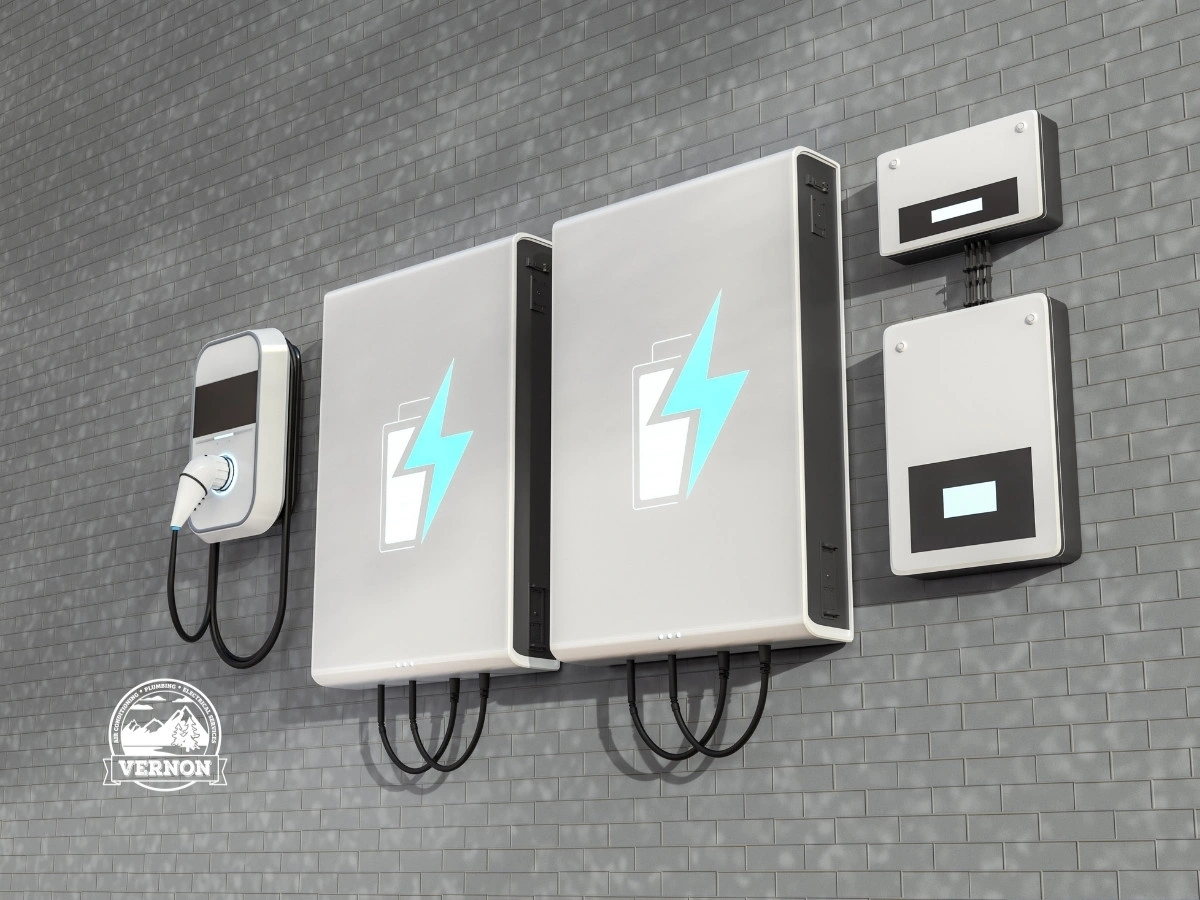
EVs store far more energy than typical home batteries.
Example: The 2025 Ioniq 5 has an 84 kWh pack with 77 kWh usable compared to a 10–15 kWh home battery.
You may still want a home battery if:
- You want backup even when your EV isn’t home
- You want to shift energy daily, not just during outages
- You have rooftop solar with no net-metering
But for most BC homeowners, EV-only backup will be enough once V2H is active.
9. A Simple BC Homeowner Readiness Checklist
- Confirm your EV is V2X-capable
- Check if your home has a 150A or 200A panel
- Plan essential circuits for backup
- Ensure your garage has space for a wall-mounted charger
- Review local permitting requirements
- Talk to a licensed electrician
- Subscribe for updates on Canadian-certified chargers
Conclusion

V2X technology is advancing rapidly, and Canadian homeowners, especially in the North Okanagan, stand to benefit from improved resilience and smarter energy use. Preparing your home now ensures you’ll be ready the moment Hyundai, Kia, and Canadian utilities officially enable V2H and V2G.
Whether you’re planning electrical upgrades or want to understand what’s required, Vernon Air Conditioning, Plumbing & Electrical Services can help guide you.