
Table of Contents
In this article, we will discuss three types of venting: natural draft systems, direct vent systems, and power vent systems. The main difference between the three vent types is the temperature of the flue gases. If you’re wondering why the exhaust gases need to be vented, it’s because burning fossil fuels can create toxic gases like carbon monoxide.
How Does a Furnace Vent Gas?
A furnace vents gas through a flue pipe, which safely directs combustion gases like carbon monoxide outside the home. This process relies on a draft created by the furnace’s exhaust blower, ensuring harmful gases don’t accumulate indoors. Proper venting maintains safe indoor air quality and prevents health risks.
How Older, Less Efficient Furnaces Vent Gas
Natural Draft Furnace Vent
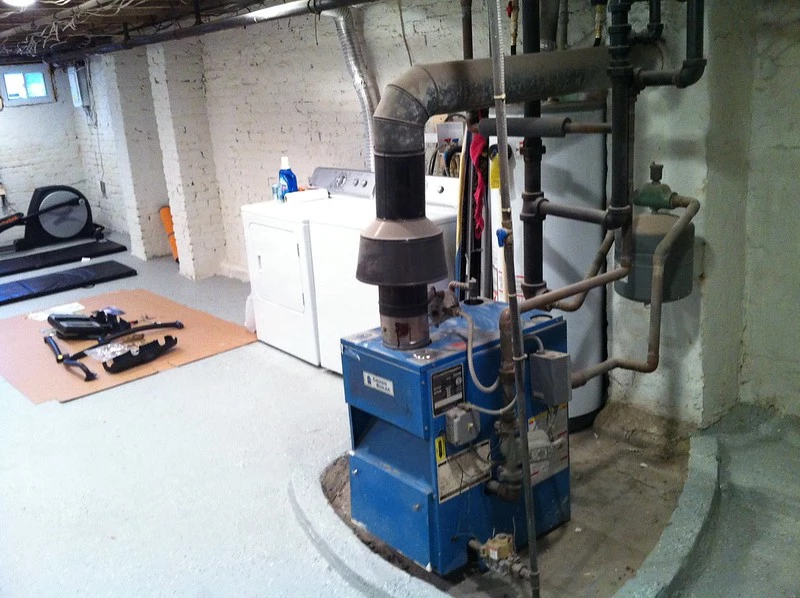
If you have a furnace with a metal exhaust pipe, also known as a B-vent pipe, that comes out the top of it, then your furnace is considered a standard-efficiency furnace and is approximately 70% efficient.
These furnaces have a less efficient heat exchanger and, therefore, extremely hot combustion gases that naturally draft out the flue pipe to the outside. The exhaust pipe is usually routed through the chimney and roof.
On the negative side, natural draft vents are more conducive to backdrafts, which reduces efficiency and can be a safety concern.
What is a B-Vent Pipe?
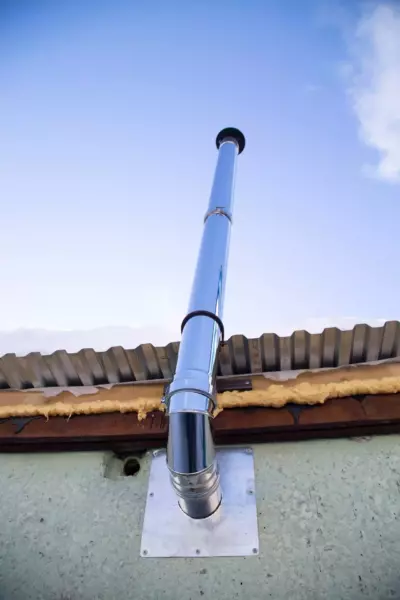
B-vent uses a double wall of metal pipe. The inner pipe uses reflective aluminum, which heats quickly, to help the warm flue gases vent to the outside. There is airspace between the inner and outer metal pipes, which provides insulation against heat loss and keeps the warmer flue gases naturally drafting. The outer pipe is made of corrosion-resistant galvanized steel. This ensures strength and durability.
Direct Vent

If your metal exhaust vent is routed out of the house, it’s likely a direct vent and uses an exhaust fan. This type of furnace has a slightly more efficient heat exchanger that is approximately 80% efficient; therefore, the combustion gases have a lower temperature and need help getting vented to the outside.
The flue pipe on these furnaces is only sheet metal and can be extremely hot to the touch. Local codes ensure that the venting pipes don’t come into direct contact with combustible materials.
What is a Direct Vent Furnace?
A direct-vent furnace has a self-contained, sealed heat exchanger that warms inside air by the home’s air across the sealed heat exchanger. The combustion byproducts are then vented outside using an induced exhaust motor, meaning they do not need to be attached to the chimney and can be installed on most exterior walls.
How High-Efficiency Furnaces Vent Flue Gases
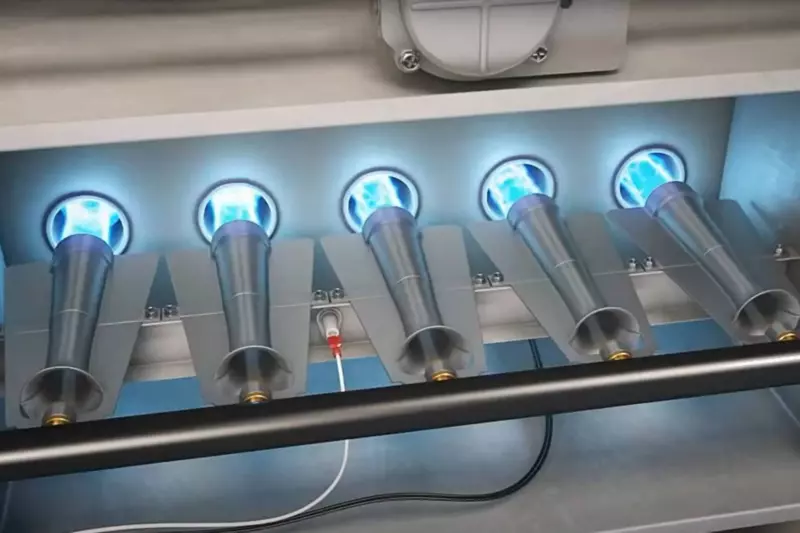
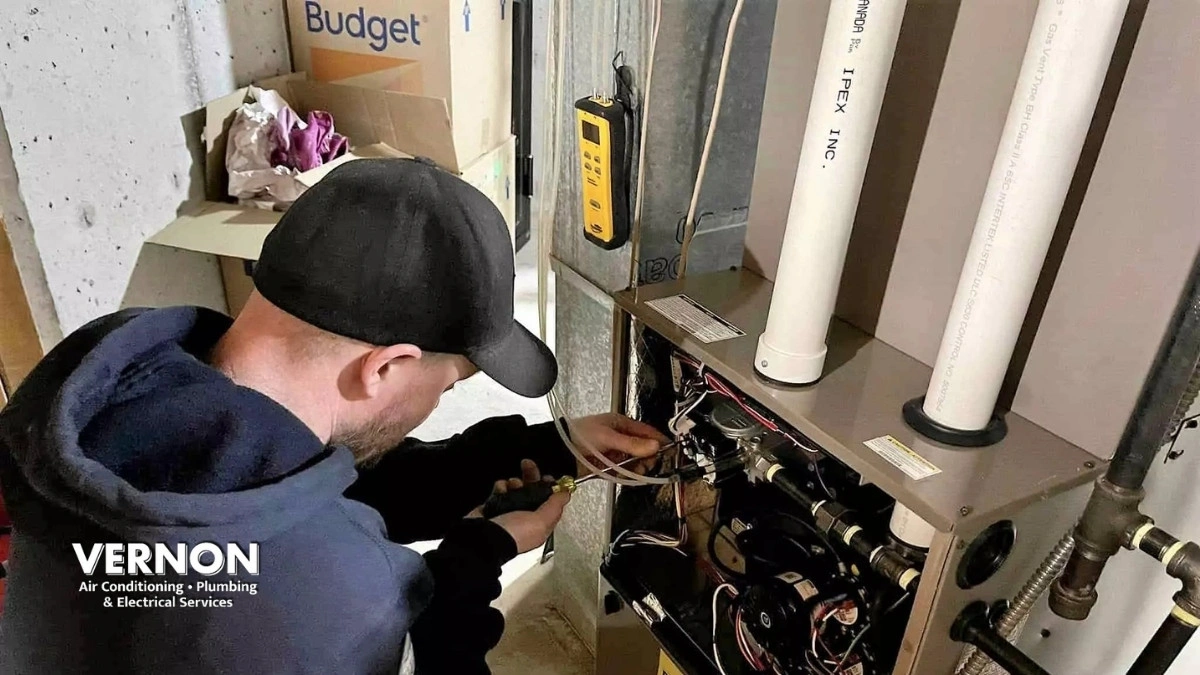
A high-efficiency furnace uses a primary and secondary heat exchanger to remove as much heat energy from the combustion process as possible. Due to the lower temperature of the combustion gases, a metal exhaust pipe is no longer needed.
Therefore, your high-efficiency furnace uses either a single-pipe or two-pipe vent system. These propane or natural gas furnaces are considered to be at least 90% efficient.
One of the challenges with high-efficiency condensing furnaces is that the combustion gases end up condensing on the inside walls of the PVC pipe, drain back to the furnace, and then out the condensate drain line. The combustion by-products have a high pH level and are considered acidic, so please drain them accordingly.
Single-Pipe vs. Two-Pipe
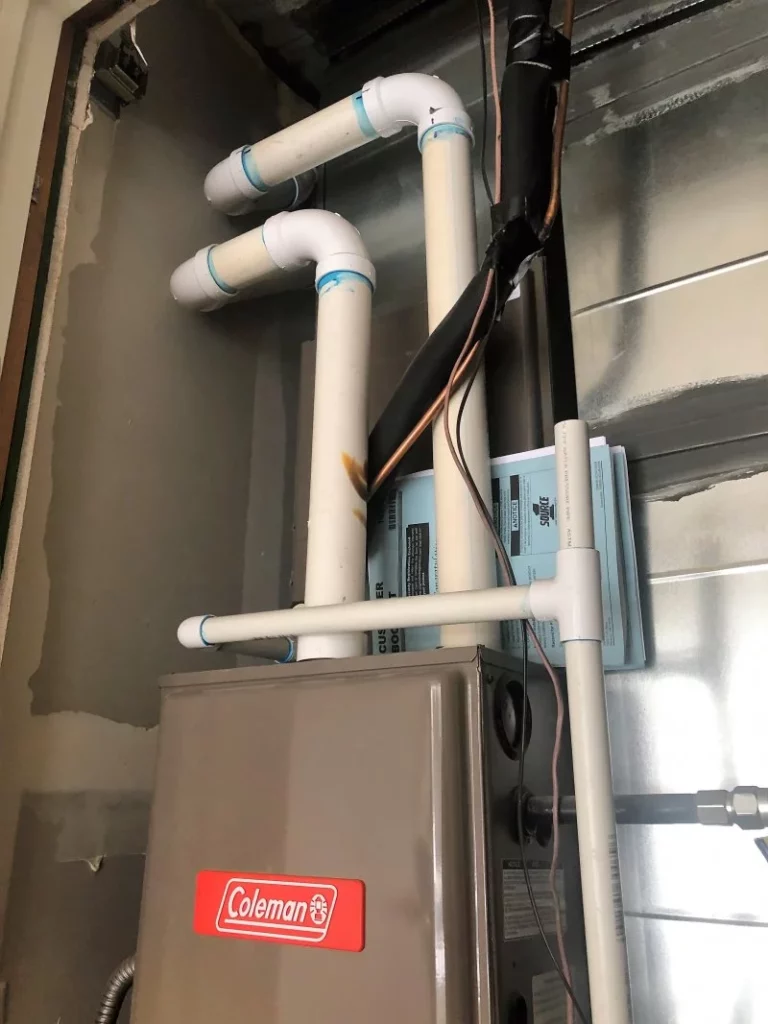
All propane and natural gas furnaces require sufficient carbon dioxide for the furnace to reach complete combustion. If there isn’t enough, then combustion byproducts could include carbon monoxide, which could be poisonous to your family.
A single-pipe heating system uses combustion air from the space around the furnace. The problem with this is that the furnace could use up all the room’s air. For this reason, local codes ensure sufficient air is available for single-pipe heating systems.
✋ NOTE: All propane and natural gas furnaces can be installed with two-pipe furnace venting.
Many contractors will only install a single venting pipe system when a two-pipe system ensures that your gas furnace always has enough combustion air. Ask your HVAC contractor what they do before accepting their bid. For the safest HVAC system possible, request that your furnace’s exhaust have two pipes.
✅ PRO TIP: Most regions require special high-temperature PVC pipes for high-efficiency furnace installations.
Blocked Or Damaged Exhaust Pipe

If the flue pipes are blocked or damaged in any way, the combustion process may create carbon monoxide. Other issues can include flue venting cracking or joints failing.
What can cause a vent pipe to get blocked?
Bugs, small animals, bushes, snow, or ice can easily block the furnace venting, which could cause any of the above issues. Most furnaces these days have safety switches to turn them off before any damage can arise.
What’s The Danger?
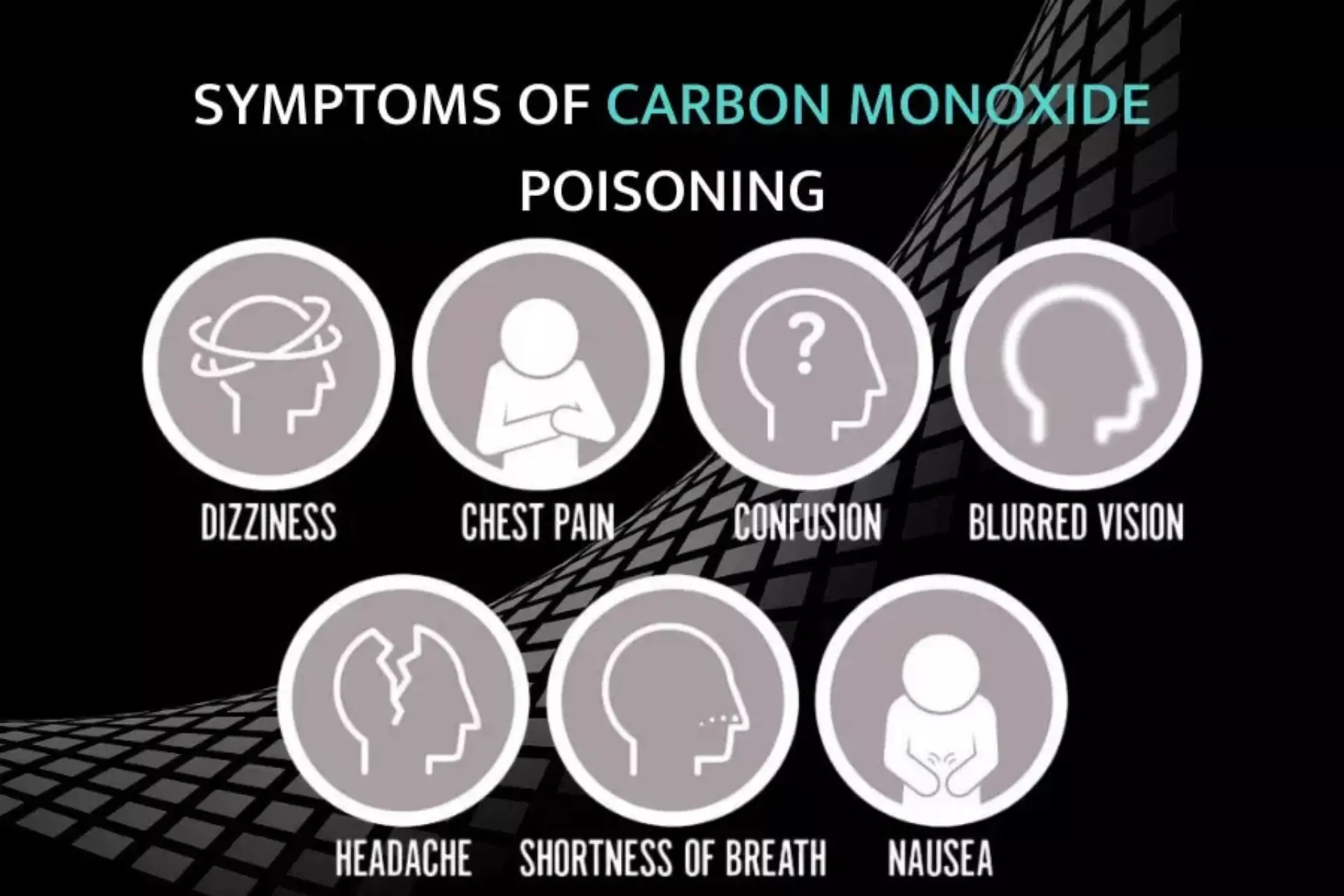
A blocked vent pipe might make a furnace short cycle and nothing more. However, a clogged or cracked flue pipe also has the potential to circulate carbon monoxide into your home.
Final Thoughts on Furnace Venting Systems
Deciding on what type of furnace to buy has more variables than just the venting system, but it’s one to consider. Generally, I would say that a direct vent is the least expensive option. It’s easier to install than a natural draft but isn’t as efficient as a system with one or two PVC flue pipes.

Understanding the different types of furnace vents is a key step in making the right decision for your home’s heating system. If you’re still unsure which option is best, it’s always a good idea to speak with a trusted local HVAC professional who can assess your home and explain their recommendations clearly.
If you’re located in Vernon or the North Okanagan, reach out to Vernon Air Conditioning, Plumbing & Electrical Services. Our experienced team can help you choose the right furnace and venting setup to keep your home safe, efficient, and comfortable all winter long.