
Table of Contents
Dual-fuel heat pumps, often called dual-fuel heating systems, are becoming a smart choice for homeowners who want to cut heating costs without sacrificing comfort. By pairing an electric heat pump with a gas furnace, these systems give you efficiency on mild days and dependable heat when the cold sets in.
In this guide, we will break down the pros and cons of dual-fuel systems. You will learn how they can deliver energy savings and flexibility, and also what challenges to expect, such as higher upfront costs and added maintenance. If you live in BC and deal with freezing winters, this article will help you decide whether a dual-fuel system is the right fit for your home.
📘 What is a Dual Fuel Heat Pump?
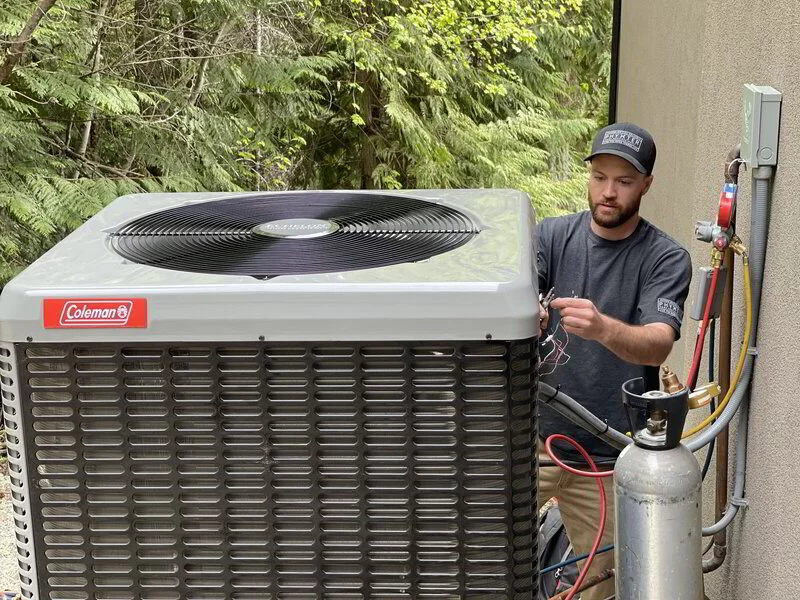
A dual fuel heat pump, also known as a dual heating system, combines an electric heat pump and a gas furnace to maximize energy efficiency. The way dual fuel heat pumps work is simple: the heat pump handles heating during milder weather, while the gas furnace kicks in when temperatures drop below freezing, when the heat pump becomes less efficient.
In Vernon’s cold winters (often dropping below -5°C), this system ensures comfort without the high energy costs of running the heat pump alone. This hybrid approach saves energy and offers flexibility, making it an ideal solution for homes in climates with significant seasonal temperature swings.
Pros of Dual Fuel Heat Pumps
Improved Energy Efficiency
Dual-fuel heating systems offer excellent energy efficiency by switching between electric heat pumps and natural gas, based on outdoor temperatures.
In milder weather, the electric heat pump handles heating efficiently, while the gas furnace takes over in colder conditions, like Vernon’s winters, where temperatures often drop below -5°C. This ensures optimal energy use, resulting in reduced waste compared to all-electric or gas-only systems.
Cost Savings Over Time
With energy savings from dual-fuel systems, Vernon homeowners can reduce their utility costs by using each energy source when it’s most cost-effective, whether it’s a furnace or a heat pump.
In milder months, the heat pump reduces electricity use, while the gas furnace steps in when needed during colder periods. Over time, these savings can offset the higher installation costs, making dual fuel systems a wise long-term investment.
Flexibility in Harsh Climates
In the North Okanagan’s cold climate, dual-fuel systems provide flexibility by automatically switching to gas when temperatures drop, ensuring they generate heat efficiently year-round.
Unlike all-electric systems, which struggle in extreme cold, dual-fuel systems ensure reliable warmth year-round, offering an advantage in regions with significant seasonal variations.
Environmental Impact
Dual-fuel systems, also known as hybrid heating systems, have a lower environmental impact by reducing natural gas consumption and utilizing electricity when it’s most efficient.
For eco-conscious homeowners, this means a smaller carbon footprint compared to traditional heating systems, with the added benefit of potentially eligible renewable energy credits in Canada.
📗 Learn More: What is a Dual Fuel Heating System?
Cons of Dual Fuel Heat Pumps
Higher Initial Installation Costs
One downside of a dual fuel heating system is its higher upfront cost than traditional systems. Installing both a heat pump and a gas furnace requires a more considerable investment, typically ranging from $5,000 to $22,500 in Canada, depending on the size of the home. However, energy savings can offset these costs over time, especially in climates like Vernon, where both systems are used effectively.
Maintenance Complexity
Since dual-fuel systems consist of two units—a heat pump and a gas furnace—they require both units to be serviced. This can increase maintenance costs, as homeowners must schedule regular checkups for each system, whether it’s a furnace or a heat pump.
Typically, this means annual maintenance for both components, which could cost around $200–$400 combined, depending on service rates.
Unsuitable for Milder Climates
In regions with mild winters, the gas furnace component of a dual fuel system may not be necessary, making the system less cost-effective. However, the system’s ability to switch to gas heat is valuable in Vernon, where winters can be cold.
An all-electric heat pump might be a better choice for homes in consistently mild areas, especially if air conditioning is also a priority.
Space Requirements
Dual fuel systems also require more space than a single heating unit, which can be a challenge for homes with limited space. The need to accommodate both a heat pump and a furnace can limit installation options, a point that homeowners should consider before opting for this system.
Is a Dual Fuel Heat Pump Right for You?
Wondering if a dual fuel heat pump is worth it? Here’s a quick checklist to help decide if it’s the right choice for your home in North Okanagan, BC:
- Do you experience cold winters with temperatures frequently below freezing?
- Are you seeking long-term energy savings despite the higher initial costs?
- Do you have enough space to accommodate both a heat pump and a gas furnace?
- Are environmental impact and reduced carbon emissions vital to you?
If you answered “yes” to most of these questions, a dual fuel heat pump could be a great investment for your home.
“Recently had a furnace and heat pump installed by Ethan, Harman, Colter and Luke at Vernon Air Conditioning. They did an excellent job. They were professional and explained everything in detail along the way. I will use them in the future and highly recommend them to anybody needing HVAC work.”
– J. Smith
Final Thoughts on the Pros and Cons of Dual Fuel Heat Pumps
If you have lived through a North Okanagan winter, you know how quickly the weather can swing from chilly to bone-numbing. That is precisely where a dual fuel system shines. It provides the efficiency of an electric heat pump on mild days and the reliability of a furnace when the mercury drops.
Yes, the upfront cost is higher, and you will have two systems to maintain; however, many Vernon homeowners view the long-term savings as worthwhile. More importantly, they appreciate the peace of mind that comes with the cold really setting in.
If you are weighing your options, talk with the team at Vernon Air Conditioning, Plumbing & Electrical Services. We will walk you through the numbers, the comfort benefits, and help you determine whether dual fuel is the right match for your home. The goal is not just keeping you warm this winter, but setting up a system that makes sense for the next 15 to 20 years.
Vernon Air Conditioning, Plumbing & Electrical Services
909 Kalamalka Lake Rd, Vernon, BC V1T 6V4
Phone: 778-403-7886
Contact us to discuss whether your home would benefit from a Dual Fuel Heat Pump? Book online or call us today for fast service across the North Okanagan.